7:40 — the customer leaves the keys and goes to work. So far one decision has been made: the car stays. 14:10 — the mechanic opens the suspension and it turns out that besides the shock absorbers a bearing has to be replaced, or the job makes no sense. 16:55 — the bill is ready and carries an amount nobody knew that morning, including the person now signing it. 18:20 — the customer returns for the keys.
In that case the terminal stands for almost 11 hours and is needed for thirty seconds. Under two conditions: that the customer makes it before closing, and that the amount matches what was agreed in a rush on the phone. Neither is certain, and hardware billed on a subscription does not assume that sometimes there will be nobody to pay.
Paying for a service at a garage: the category where cash still holds the majority
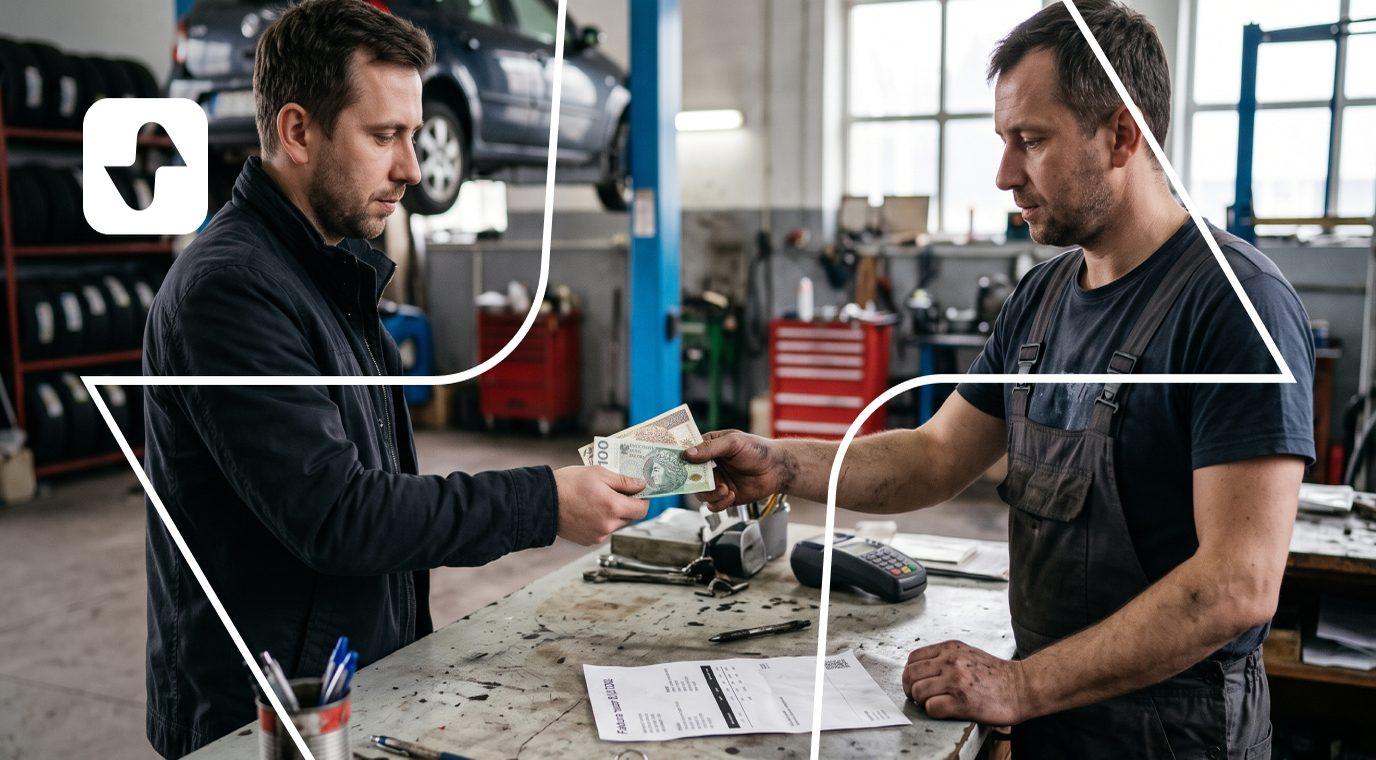
The payment mix in car dealerships and workshops looks like this today: cash 52%, card 30%, mobile devices 9%, transfer or BLIK 8%. The figures come from the study “Poles’ payment habits and the acceptance network in 2025” (POLASIK Research with Minds & Roses) for the Polska Bezgotówkowa Foundation; the Foundation published the automotive results around the turn of September and October 2026.
Is fifty-two percent a lot? A wider sample from the same POLASIK Research cycle answers. Across all retail and service points in Poland cashless takes 71% of transactions, and cash 29%. A garage therefore has almost 1.8× more cash than the average point in the country. The other side shows the same: card, mobile devices and transfer with BLIK give 47% of transactions in automotive — 24 percentage points below the national average.
A second reference cuts across the first, because it shows the direction of change. In 2018 card and contactless together gave 20% in this category. Today card and mobile devices are 39% (the summing of the two is mine — the Foundation compares 20% with card alone, i.e. 30%). The share nearly doubled in seven years and still has not crossed half. The category moves the same way as the rest of the market, only with a lag measured in years.
One caveat has to be stated at once, because it changes the weight of these figures. The Foundation reports automotive as a whole: dealerships together with workshops. A dealership sells cars — amounts that by definition nobody pays by card, going by transfer or credit. If those could be taken out of the sample, the cash share in workshops alone would exceed 52%.
What does a terminal assume about a transaction before anyone switches it on?
A device at the counter assumes three things meet at one point: a known amount, a payer, and the place where the hardware stands. In retail those three meet on their own, because the price is on the shelf and the customer is at the till — the same moment described from two sides. That is why the terminal was designed for a store, and why it works there without fault.
In a service priced after the work, each of those three elements has its own timetable. The amount appears on the shop floor when the mechanic sees what is inside. The customer appears when they finish work, often after reception hours. The counter stands in yet another place than the car and the customer. At the end of the day the garage has three exits: hold the car until payment, take cash, or give an account number. The first damages the relationship, the second returns in the stats as those 52%, the third moves the money to next week.
Of the four methods only one does not require the amount and the payer to be in the same place at the same hour — transfer or BLIK, eight in a hundred transactions. How many of those 8% are a car purchase at a dealership and how many a repair paid after pickup, the Foundation does not split. That is exactly the one figure worth seeing separately in this category, because it describes payer behaviour when the counter is already closed.
Drivers are sure you can pay. In food service they are right 85 percent of the time
The most interesting gap in this study sits in beliefs. 54% of respondents think cashless payment is available in every or almost every garage. For food service that belief is 85% (versus 63% in 2018), for hotels and travel agencies — 72%.
Thirty-one percentage points between a restaurant and a garage is not an opinion about service quality. It is memory of the last time someone had to hunt for an ATM after a repair. For the garage that means a concrete cost that appears on no invoice: nearly half of customers arrive assuming they will need cash on them, and some of them do not have it that day.
In the background a second figure grows that only shows over years. In the 18–24 group NFC mobile payments are already nearly half of all transactions, and cash — 19%. The customer who in five years brings their first own car for a service reaches for cash in one transaction in five. The garage till is still set for one in two.
How many garages does this even cover?
The scale of this market is smaller than the registries show, by a gap that cannot be ignored. The report “The workshop market in Poland — yesterday, today and tomorrow” by MotoFocus research finds that against 81,000 entities in official data, about 24,000 workshops actually operate — more than three times fewer. The authors explain the gap with sole traders registered under a workshop code who do not run a workshop. Geographic spread can run from double to triple digits: from 6 workshops in one county to 962 in another.
That figure has a date — the report was published in December 2024, so today it is two seasons older than the payment data I set it against here. The direction is still readable: the real market is tens of thousands of firms, mostly a few people, with one reception desk and nobody sitting at the counter from open to close.
For terminal vendors this is an awkward category. For the garage — a situation where the fixed cost of a device is spread over transactions that are few and large. For the customer none of that matters beyond taking out a wallet.
The acceptance network has stopped growing
NBP statistics for Q1 2026 show something of special weight in this category. Terminals in Poland number 1.412 million — practically unchanged from the record Q4 2025 (297 devices fewer). In the same period the number of firms using terminals fell to 578,200, down almost 5,000 in a quarter, and card-accepting points — to 888,800, or just under one percent.
The other side of the same market looks very active. The Polska Bezgotówkowa Foundation says that in 2025 the programme added about 50,000 payment devices, and the counter since the start of the programme passed 0.7 million devices at 549,000 beneficiaries. More than half a million firms have therefore been through a terminal subsidy — and in the category discussed here cash still takes more than half of transactions. Programme money went where a counter already stood and where the customer stands at it at the moment they know the amount.
So there are as many devices, and fewer firms holding them. NBP does not break down causes, so interpretation must be careful: some of the drop is closed businesses, some operator switches, some exits after the support period. The conclusion these data allow is more modest and enough: the “put a terminal and the problem vanishes” model has stopped picking up new firms in recent quarters, and categories that did not buy it for twenty years will not buy it because the device gets twenty zloty cheaper.
Anna Spychalska-Grzeszek, managing director of the Polska Bezgotówkowa Foundation, commenting on the automotive data, said: “Today for a car workshop the ability to take cashless payments is not only a matter of customer convenience but also an element of a modern service standard.” The sentence describes market expectation accurately. Next to 52% cash in the same category it also shows how far expectation stands from settlement. Entrepreneur belief the market already has; what is missing is a tool that fits the order of events that rules a workshop.
Where in that order of events does a QR code fit?
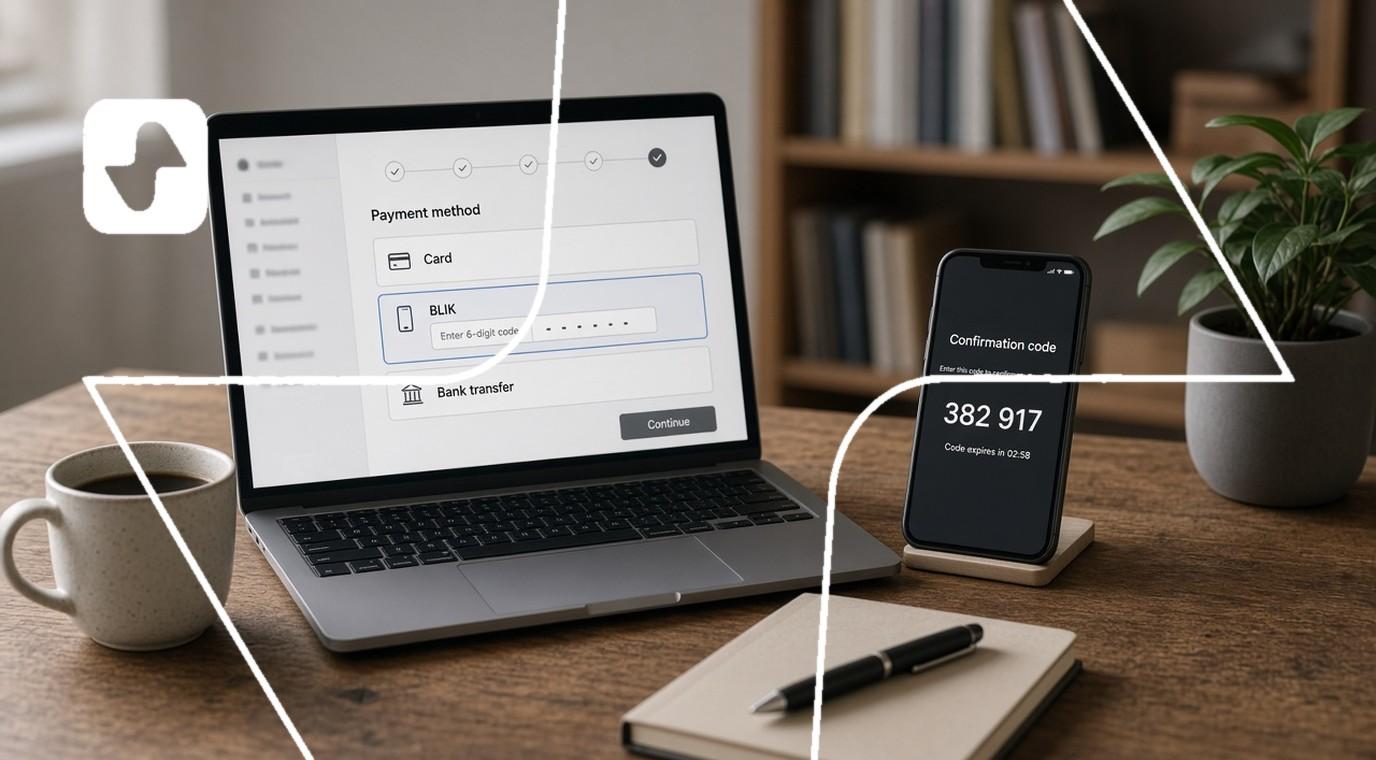
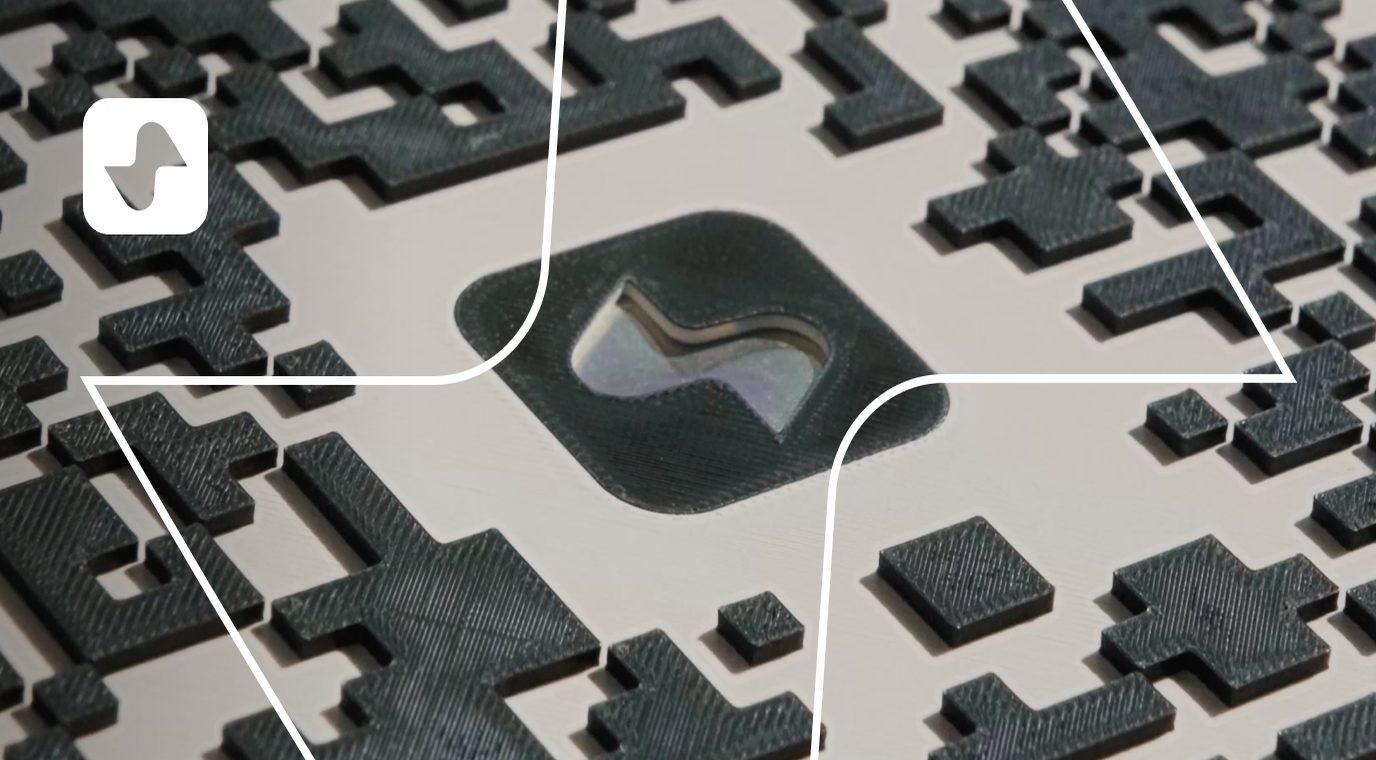
At Paymove, for businesses such as car workshops, we introduced Scan&Pay — payment without a device. The owner enters the amount in the app after the service is done, the customer scans a plaque on the counter and pays with BLIK, Apple Pay or Google Pay from their phone, without installing anything. All in a model of PLN 0 activation and PLN 0 subscription, with a fee charged per transaction.
The mechanism matches the order of events from the opening of this text, because the amount enters the system at the moment it arises — when the mechanic finishes the job. Two things have to be named outright, or the picture is unfair. First, the saving on the garage’s side comes from the margin currently paid to the terminal operator staying with the merchant, while the fee is added on the payer’s side — the customer will see it on the phone screen, and that is a change for them too. Second, the fiscal duty follows the rules and the type of activity. Paymove handles the payment; the cash register and receipt stay on the garage’s side exactly as with a terminal and with cash.
What to count this week
Every figure in this text describes the market, and the decision is made in one garage. There are two items any owner can count from their own jobs in a quarter of an hour and that no study has.
First: how many jobs last month ended at an amount different from the one given when the car was booked in. That measures how often you can pay up front at all. Second: how many cars were collected after the hour when reception is already empty. That measures how often payment had to happen away from the counter, and what share of turnover depends today on whether the customer remembered the transfer.
If both numbers are near zero, the garage behaves like a store and a terminal at the counter will do its job. If either exceeds one third of jobs, the problem sits before the choice of device: in hardware that assumes the price is known before the work begins.