A year ago traffic from AI assistants was for e-commerce roughly what Pinterest traffic once was: everyone measured it, every report named it, and in conversion rankings it sat below average. You could ignore it without consequence and most stores did exactly that.
In May 2026 the same source, the same methodology — and the opposite result.
A twelve-month reversal is interesting on its own. More interesting is that most stores still have nothing to handle that traffic with.
Traffic that a year ago was worth less than ordinary
Start with a figure that looks like a typical AI presentation statistic. According to Adobe Analytics, retail traffic from AI sources rose in May 2026 by 138% year on year. Alone it says nothing — percentages grow easily when the base is small.
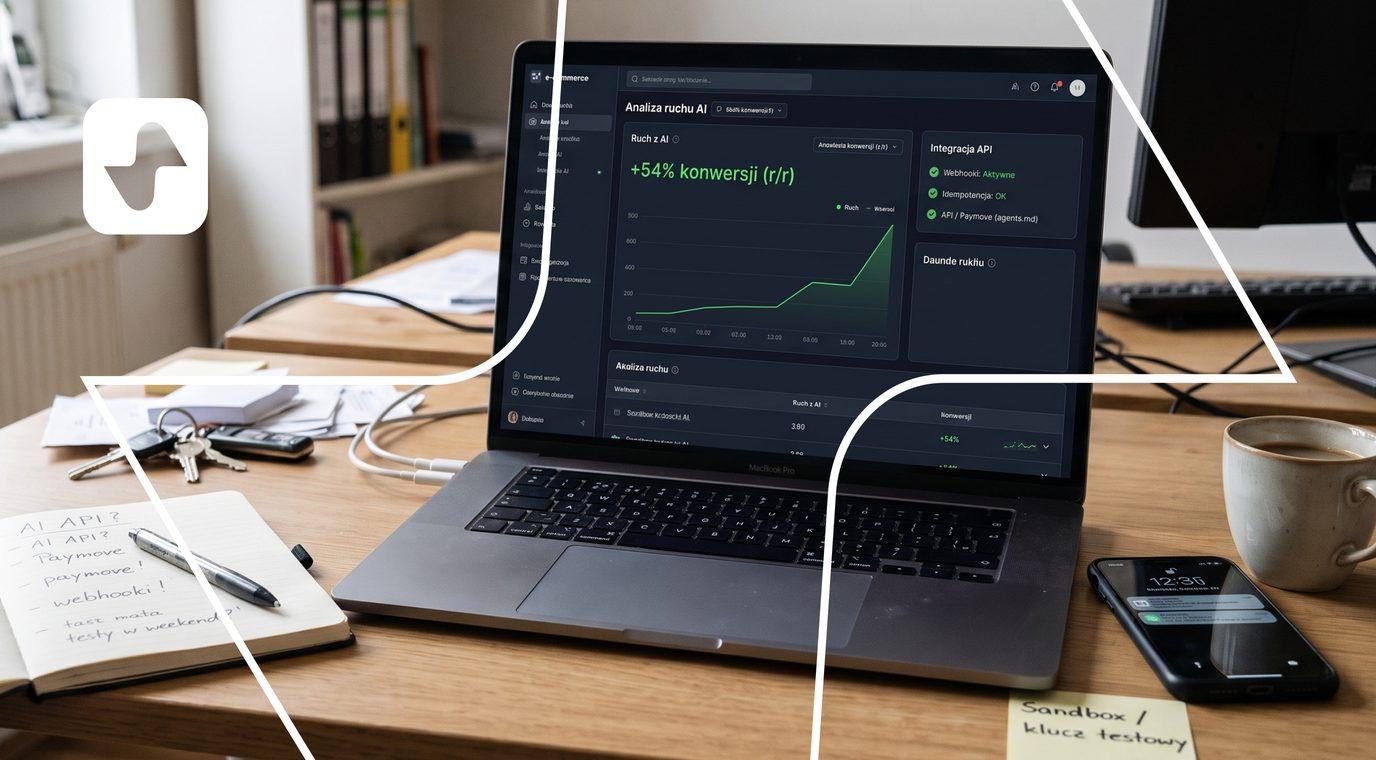
It gets interesting at the second figure. The same visits converted 54% better than non-AI traffic and generated 53% higher revenue per visit, with a bounce rate of 17–20% versus 27% for other sources.
Now the reference without which the whole thing is only a pretty bar. A year earlier AI traffic converted roughly half as well as ordinary traffic. In twelve months the channel moved from “curiosity that does not sell” to “best-converting source in the table.” Not because models learned to sell — because the moment a person asks an assistant changed. A year ago they asked from curiosity; today they ask with a wallet in hand.
Fair to note here: the conversion measure comes from the US market and there is no comparable study for Poland. There is, though, a Polish measure of the behaviour itself, and it comes out stronger than most people would bet. In Mastercard’s September study (on a large group of 26,000 respondents) 85% of Polish teenagers looked up product information via AI, versus 72% among parents. Also 34% of respondents trust an AI recommendation more than a friend’s opinion.
A recipient who is thirteen today will have their own card in five years. Mastercard forecasts that by 2030 about 300 million people will regularly use agents when shopping — roughly one in ten worldwide.
Eight protocols and one figure that shows where the bottleneck is
If traffic is there and conversion is there, where is the problem? In the layer talked about least because it is dullest: payment.
Over the last twelve months a full set of standards has emerged meant to let an agent close a transaction. ACP — Stripe and OpenAI, September 2025. AP2 — Google, September 2025, from April 2026 under the FIDO Alliance. UCP — January 2026, behind it Google, Shopify, Etsy, Wayfair, Target and Walmart. Plus MCP, the layer in which an agent talks to external tools at all, handed to the Linux Foundation by Anthropic in December 2025. In total, according to a September review, eight protocols are active in this area.
Eight standards in a year usually signal that the industry knows something matters but does not yet know how to do it. The question is how much real traffic flows under those standards, and here we have a measure, not an estimate.
Analysts examined x402, a machine-payment protocol launched by Coinbase: 198.9 million transactions worth USD 52.7 million. After filtering suspicious activity, USD 25.62 million of likely trade remained. And the share of payments actually from AI agents was estimated at 0.6% to 7.5%.
A protocol built so machines can pay machines therefore mostly handles traffic that has nothing to do with agents — an ordinary script leaves a blockchain trail indistinguishable from an agent. The authors’ conclusion is concise: infrastructure is growing faster than the agents themselves
The same proportion shows elsewhere: the MCP repository has over 90,000 stars on GitHub (as of September 2026), the ACP repository — about one and a half thousand. A rough metric, but the same direction: agents reach for tools en masse and pay rarely.
Between nearly half the market asking an assistant about a product and a few percent of truly agent payments in a protocol built for paying stretches exactly what the puzzle lacks.
Worth looking along the way at who stands behind UCP: Shopify, Etsy, Wayfair, Target, Walmart — firms that had an API layer ready before anyone started talking about agents. For them supporting a new protocol is a quarter of work for a team that already exists. A smaller seller on a “boxed” platform must first have a payment that can be invoked programmatically. Part of the market has one step to take, part three — and that second part does not even know it is at the start line.
The bottleneck is not the model. It is what the seller exposes outside
An agent that is to close a purchase needs five things on the seller’s side, and none of them requires waiting for any standard to win:
A payment that can be created with an API call, not a click. If the only path to start a transaction is a browser form, the agent must impersonate a human — and will fail unpredictably.
A sandbox and a key available at once. If a test payment needs a sales call and a week of verification, nobody will build an integration on it over a weekend. And weekends are when most things that later become standards are born.
A signed webhook, not a redirect. This is where agent integrations break most often and most expensively. It is tempting to treat the user’s return to returnUrl as proof of payment, and that is a mistake that with a human in a browser shows rarely and with an agent regularly. An order is fulfilled after a verified webhook, not after a redirect.
Idempotency. An agent retries requests automatically — on timeout, network error, ambiguous response — and does so more often than a human. If a repeated request creates a second payment instead of returning the first, at the end of the chain sits a customer charged twice. Ask the provider that question before the complaints team asks it for you.
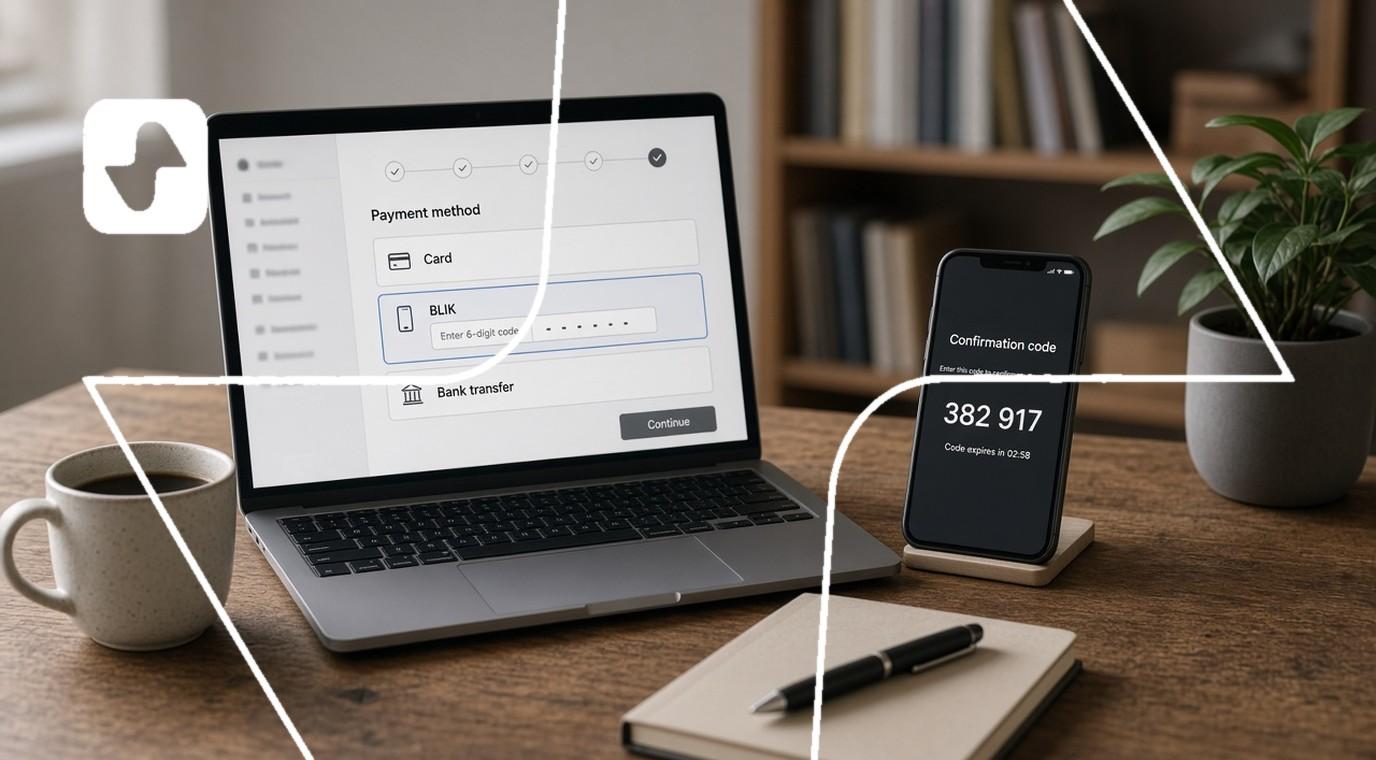
Payer consent and a decision on exactly what it covers. The reflex assumption is that a human approves every purchase at purchase time and the agent only prepares the transaction. First pilots in Poland (September 2026, a purchase of a dozen zloty ordered to an agent and paid with BLIK) show the reverse model: consent given in advance, the agent closes payment later and alone when the product is back on sale. BLIK vice-president Monika Król puts it outright: an agent can take over the whole path, from monitoring the offer to finalising the transaction.
That is the mode AP2 separates as “human-not-present,” and the place where the puzzle gets serious. Advance consent solves a real problem and is convenient. It also opens questions without good answers: for exactly what amount was it given, how long is it valid, what if the price rises between order and purchase, who is liable if the agent buys the wrong thing. At a dozen zloty the cost of error is none. At a first trip booking for three thousand — no longer.
And here the Mastercard study returns, this time from the side talked about less. 61% of parents would not let AI make a purchase without confirmation, 43% fear losing control of spending, 41% fraud. Purchase behaviour has already shifted; readiness to hand the payment itself to a machine — has not. For someone designing checkout that is the most important figure in the whole set: an agent path without a clear confirmation moment hits six in ten customers with a barrier no protocol will lift.
The Polish context actually favours this last point more than is usually noticed. BLIK closed Q1 2026 with 756 million transactions worth PLN 117.3 billion, half of them from e-commerce. A model where payment is initiated elsewhere and approved in the bank app has been a reflex here for years, not a novelty. User-granted consent infrastructure is more widely adapted here than in most markets those protocols were designed for. That is a starting advantage of Polish e-commerce talked about far too little.
Scale should still be kept in check: we are talking about single pilots, not a live service. One transaction is not a market. It is, though, a signal that the technical layer on the Polish side is ready earlier than foreign timelines would suggest.
Documentation written for a machine, not a human
There is an element in this puzzle talked about even less than webhooks that decides whether an agent will even try to integrate: whether it can read the documentation.
A human clicks through tabs and builds a picture from seven subpages. An agent does not — it needs documentation in a form it can ingest in one move: an index, full text, an OpenAPI spec, a ready procedure. That is what a seller gets from their payment provider or does not, with no say in the matter.
Here it is fair to say where we stand, because without that the paragraph would be an ad. At Paymove we published such a set: llms.txt with an index, llms-full.txt with everything in one file, openapi.yaml, skill.md with a step-by-step procedure and agents.md with rules to drop into a repository. The sandbox sits at a separate address, test keys start with sk_test_ and no sales call is needed.
What to do with this in practice?
If you sell online, one question is worth asking yourself still this quarter: can a transaction in my store be started and closed without a browser? If the answer is “no,” then whichever protocol wins you are out of that game, and traffic that converts 54% better will go where payment works without friction.
If you want to be ready for AI payments, ask your payment provider these five questions:
- Is payment created with an API call, or only through a form?
- Will I get a test key without talking to sales?
- Are webhooks signed and can they be verified on my server?
- What happens if the same request arrives twice?
- Does documentation exist in a form an agent can ingest whole — full text, OpenAPI — or only as a page to click through?
The fifth question sounds the most technical and is the most practical. If the provider’s documentation cannot be read by a machine, a human will write the integration — meaning it will appear when that human has time.