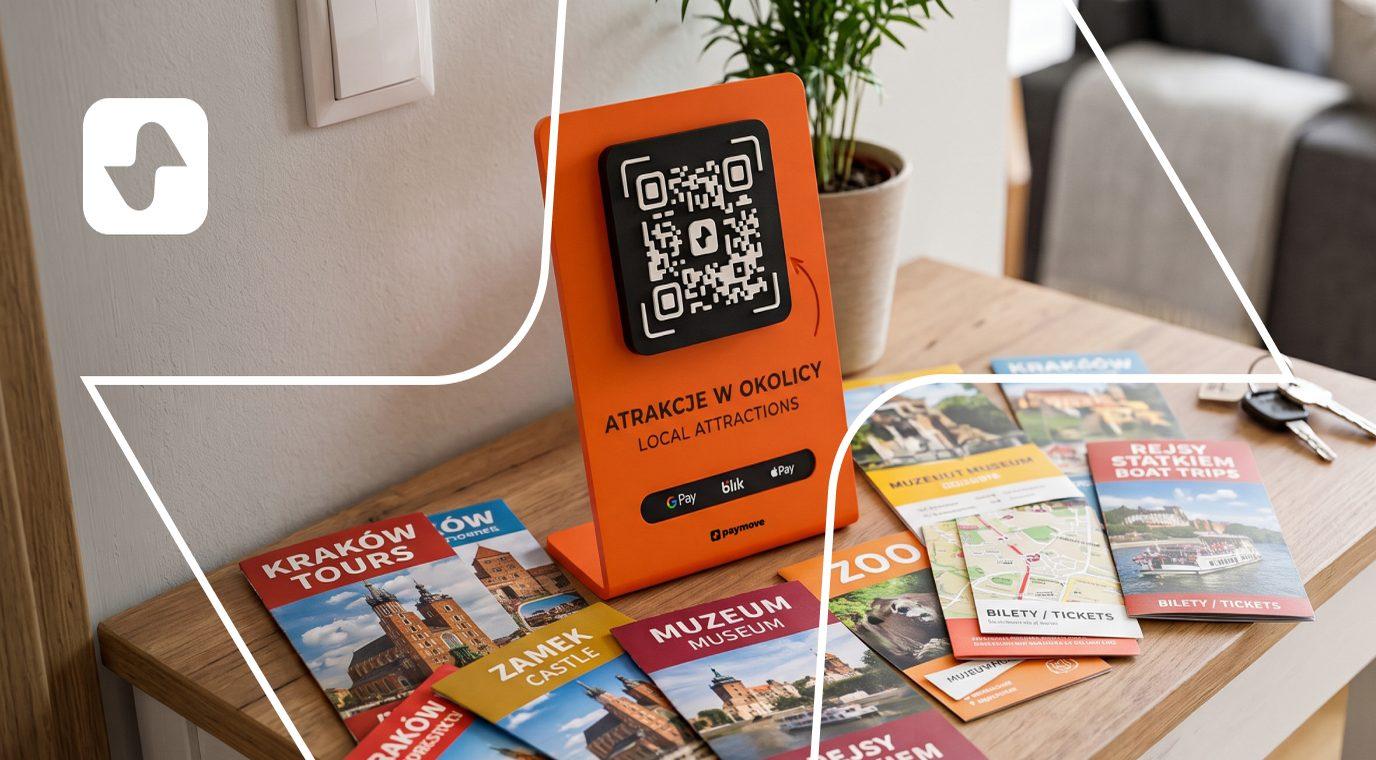
In the hallway of a rented apartment stands a plastic rack of leaflets. A Motława cruise, a ropes course, a museum with a temporary exhibition, a pizzeria with a buy-one-get-one coupon. In Polish tourism this is the oldest distribution channel — and the only one that after the season cannot say whether it sold anything.
The venue that printed those leaflets learns they worked in one case: if someone stands in the ticket queue and asks about the coupon discount. Everything else is invisible. The guest read and did not go, went and never mentioned the leaflet, or never noticed it at all because in the evening they typed “what to do in Gdańsk” on their phone.
So the question for the venue is narrower than “is it worth partnering with lodging partners.” It is: at which moment can the guest pay, and will the venue see that moment.
Four thousand three hundred venues where the guest is already there
The lodging register kept by Gdańsk held at the end of March 2026 over 4,300 venues and over 36,000 bed places, or 8.4 places per venue on average. That average alone describes the channel’s structure: its core is apartments and small venues with no reception and nobody who could advise a guest on anything.
A second figure for the same city does not match the first. The Polish Short-Term Rental Association counted in Gdańsk over 6,500 listings of short-term rental on booking platforms for 2024, against over 10,000 in Warsaw and about 8,000 in Kraków. The gap with the city register is one and a half times and comes from two different definitions, because one apartment may be listed as several offers, and some offers never enter the register. The practical conclusion from that discrepancy matters more than the figure itself: nobody knows the exact number of guest contact points in one city, and the largest part of this channel belongs to thousands of private owners whom nobody coordinates.
Demand under that channel is growing and has its own GUS measure. Through booking platforms Poland recorded in Q1 2025 7.2 million overnight stays, up 11.2% year on year, with domestic stays up 20.5% and foreign stays down 3.8%. Exactly the part of traffic that does not buy attractions through foreign tour platforms is growing, because it arrives by car from Łódź or Poznań and decides on the spot.
Now the reference point that sets the money scale. Gdańsk Zoo was visited in 2024 by 589,000 people (Polish Tourism Organisation report), and the Museum of Gdańsk with branches by 0.62 million. Gdańsk was visited in 2025 by nearly 3 million tourists. Those two populations do not overlap directly, because residents also go to the zoo, and some tourists do not stay overnight in the city. The order of magnitude remains readable: the city’s largest single attraction sells tickets to one fifth of the traffic that arrives in that city.
Ticket sales outside the venue in the only available figures
The partner channel in Gdańsk has one product someone actually measures and publishes. Gdańsk Tourism Organisation reports that in 2024 over 17,000 Tourist Card packages were sold. Against nearly 3 million tourists in 2025 that is 0.59%, and it must be said at once that this ratio mixes two year cohorts, because nobody has published newer card-sales data.
The card is a paid package at PLN 50–105 in basic and premium variants, so its decision threshold is clearly higher than for a single ticket. About 80% of its users are guests from Poland, though the product was designed for foreign traffic. And the most important thing for judging the channel: card sales have been growing for years; in 2022 they were 9,147 units against 4,269 a year earlier, so grew 2.1×. Interest is therefore real; only the base is small.
In the 2026 season the pace slowed. In June and July 1,200 cards were sold, and Gdańsk Tourism Organisation described the result as close to the previous year. By comparison, in the same city and over a slightly longer period from June to mid-August the airport sold 5,000 Fast Track services against 3,000 a year earlier, or 66.7% more. That is an impulse product, bought where from decision to use there remain a dozen metres in the airport terminal.
Putting those two figures together yields something other than “the partner channel does not work.” Guests stay in Gdańsk longer and leave more in the city: hotel occupancy in July 2026 was 90%, average stay lengthened to 3.5 nights, and the average room rate reached PLN 525 a night. The bottleneck remains the distance between the decision moment and the payment moment, and a leaflet rack does not shorten it by a metre.
How much of a ticket is left when someone else sells it?
A venue that wants to sell off its own grounds today has two paths and very different bills.
The first is tour platforms. A 2026 industry market analysis quotes 20% commission as Viator’s standard rate, 25–30% in the Accelerate programme and up to 35% in seasonal campaigns, and for GetYourGuide 30% as the default rate and 25–28% when negotiating large volume. Payout is monthly: from service delivery to money in the account usually takes 30–50 days with the first platform and 30–45 with the second, and shortening to 15–25 days costs an extra 2% commission.
On a PLN 50 ticket that means PLN 10–15 given up for the sale and at least a month of cash delay. In return the venue gets something the partner channel does not give at all: external demand — a guest who has not yet arrived.
The second path is your own channel at a lodging partner. Here the venue itself sets how much it gives for a referral, and itself decides whether it gives anything at all. It pays for something else, though: the payment layer, settlement with the partner, and deciding who is the seller. So the two paths do not replace each other. The first buys reach; the second uses the proximity of a guest who has already chosen the city.
Who owns the refund?
Before a rack becomes a point of sale, four things have to be settled that no leaflet requires.
Who is the ticket seller and who issues the sales document. What happens when a guest bought for tomorrow and tomorrow the venue is closed because of weather, and who then owns the complaint. How the partner gets their cut and whether they invoice for it monthly, because with a dozen partners that is a separate accounting process. And whether the ticket is limited to a specific hour, because then the partner channel must see availability, not only a price list.
There are no public answers to these questions, because every venue settles them in its own contract. Worth putting them before go-live, not after the first refund.
There is also a fifth, least comfortable thing. Part of partner sales is guests who would have come to the ticket desk anyway. Without measurement the whole volume is attributed to the new channel and its result is overstated. Until the venue knows what share of that sales is new, it does not know how much it may really give the partner.
What can handle this today?
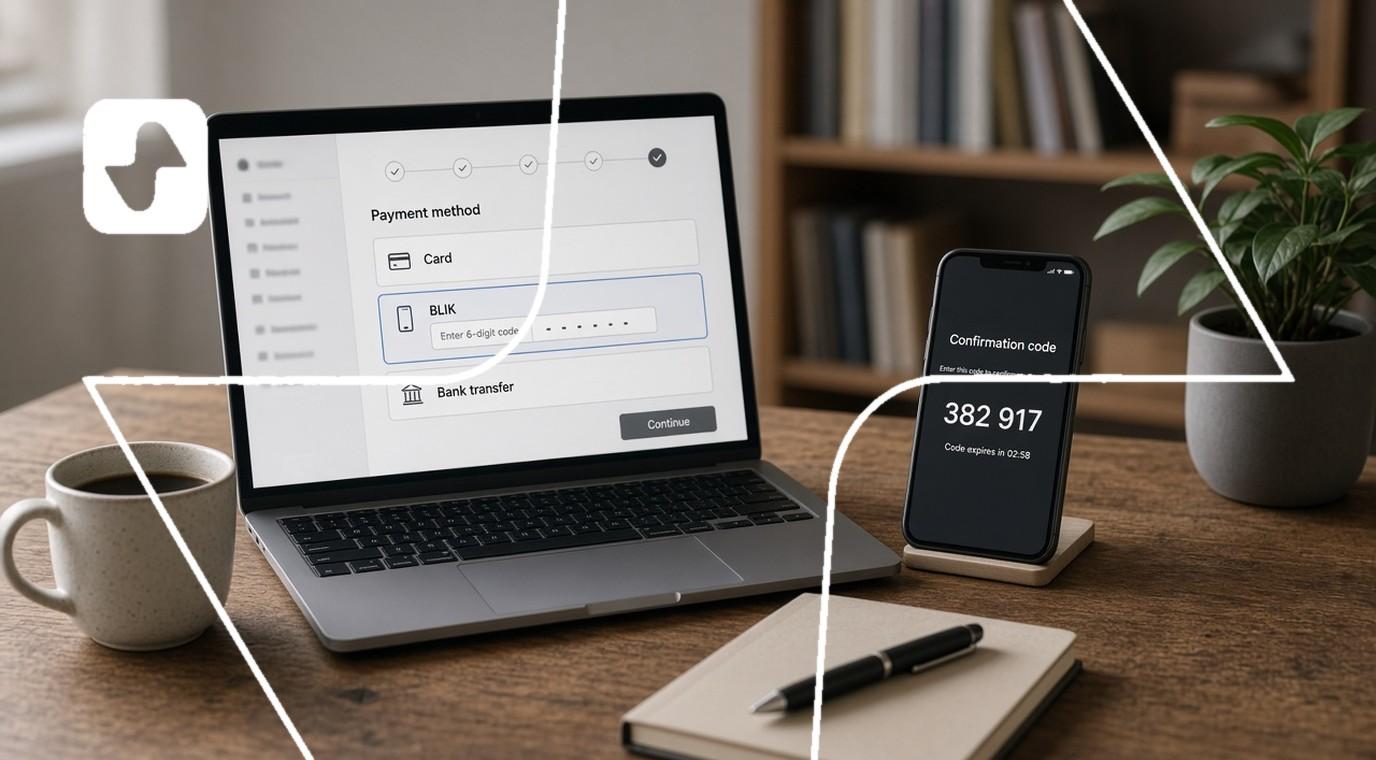
In the Pay&Go line you can place a QR code where the guest reaches for their phone. The whole flow looks like this: scan with the camera, choose ticket type, pay with BLIK, Google Pay or Apple Pay, no app and no registration, in under 20 seconds. That is how over 200 sales points in Poland operate, including Gdańsk Zoo, POLIN Museum, Gdańsk Airport with Fast Track, and Sun & Snow on attraction upsell.
Technically the partner channel needs nothing new. Paymove documentation describes Payment Link: the venue creates a product once, for each payment registers a subproduct with its own identifier, amount and description, gets a link and QR code back, and after payment a webhook arrives with status and a signature to verify. That means every partner can have their own code, and the venue sees in the panel in which apartment payment was made.
The first partner-channel go-live is worth designing around measurement: a separate code per partner, one season, and at the end two figures per partner — transactions and the share of guests who would not have bought the ticket otherwise. Until those two figures exist, partner commission is set in the dark: the venue gives a percentage without knowing whether it is buying new sales or topping up its own.