The Cashless Turnover Support Programme funds a merchant’s terminal for twelve months. Separately, the Polska Bezgotówkowa Foundation covers transaction handling costs — but only up to PLN 100,000 of turnover on the device. Two support streams, two different counters, two different expiry dates.
The rules in this shape have applied since 1 January 2023. “Given the difficult situation of small businesses during the economic slowdown, we decided — together with our stakeholders — to return to funding traditional and softPOS terminals for 12 months,” said Joanna Erdman, president of the Foundation, at the time. Earlier, between March and December 2022, support lasted five months; before that it was twelve, but for three devices at once. Anyone comparing offers in search today hits all three versions at once.
One hundred thousand zloty spread over twelve months is PLN 8,333 of monthly turnover. A salon with PLN 12,000 card turnover a month will burn through the limit in a little over eight months and from month nine will start paying commission — while still paying nothing for the terminal itself. A detailing shop at PLN 24,000 — in a little over four months. Better sales shortens one half of the subsidy and leaves the other untouched.
The cost of a payment terminal starts counting later than the contract
After support ends, a transition period begins. In April 2026 one operator spelled it out: on top of the 12 programme months it adds eighteen more in which terminal rental or softPOS app maintenance costs one zloty a month, at 0.55% commission on Visa and Mastercard and 0.39% on BLIK. Thirty months in which rental itself never exceeds one zloty. Commission runs normally through that time — at PLN 24,000 monthly turnover that is PLN 132, one hundred thirty times the line the merchant sees in the contract as the terminal price.
That is one operator’s April offer, not a market standard, but it shows how far into the future the moment of the full price can shift. A standard lease is signed for 12, 24 or 36 months. A twenty-four-month lease therefore ends six months before the preferential period ends — when the merchant still has not seen a single full invoice. The renewal decision is made on a price that is not yet in force.
What that price is can be checked in operators’ materials: from PLN 30 to 100 net per month for device lease, plus commission “typically from 0.5%”, which includes the legally capped interchange fee — 0.2% on debit cards and 0.3% on credit cards in the EU. The spread between the lower and upper subscription bound is more than threefold. Operators list what drives it: device type, usage pattern, contract terms, acquirer margin. No price list, though, says how those factors translate into a rate for a specific firm — that is set in conversation.
There are also conditional lines that sites do not list, because they may never appear. A 2019 guide for micro-entrepreneurs lists them in an order that has not aged out: a minimum monthly transaction threshold that unlocks the best tariff, and penalties for missing contracted turnover. The same guide points to a detail missing from most contract templates: service outages should pause the threshold clock, and usually they do not.
February costs the same as July
For some service firms the most expensive line in the whole contract is the month when nothing happens.
Subscription is a fixed cost. Commission is variable. A firm with even traffic will not notice the difference; a seasonal firm pays the full rate twelve times a year for a device that works for five. A mobile bike service, equipment rental, wedding crew, outdoor detailing, a practice run beside a day job — all have months when the terminal sits in a drawer and costs the same as in peak season. At a PLN 50 net lease that is PLN 350 a year for seven idle months.
In a study commissioned by the Polska Bezgotówkowa Foundation, covered by fintek.pl on 11 August 2026, 48% of respondents expect cashless payment at local stalls and seasonal sales points, and 51% at equipment rentals. Customer expectation is therefore highest exactly where revenue is uneven and the subscription is flat.
An earlier Foundation study asked micro-enterprises about their biggest challenges. In a 9 April 2026 publication, 41% pointed to rising energy costs, and 40% each to employment costs and new taxes. Payment handling costs do not appear in the published results — it is unclear whether they were even in the answer set, so this is a signal, not proof. Fifty zloty a month dissolves into the background with electricity and bookkeeping. Only multiplied by twenty-four does it become a sum worth discussing. In the sample 75% of firms were in services, 74% were sole traders, and among firms with direct customer contact 87% had a terminal.
The tax relief works the other way and is worth calculating carefully, because it is often overstated. Taxpayers exempt from fiscal cash-register recording can deduct up to PLN 2,500; others up to PLN 1,000 — in the year the expense is incurred and the next year only, not indefinitely. Cashless taxpayers can deduct 200% of expenses, capped at PLN 2,000. That is a deduction from the tax base, not from tax: a PLN 600 annual subscription fits the limit in full, but really cuts tax by about PLN 72 on the progressive scale and PLN 114 on the flat rate. In the preferential period, when rental costs one zloty, mainly commission is deductible — at PLN 12,000 monthly turnover and 0.55% that is about PLN 790 a year.
A market that is not growing despite free devices
The programme is in its ninth year. According to the Foundation it has covered more than 550,000 firms and institutions, where 713,000 devices were installed (as of early 2026). In September 2026 the Foundation separately summarised the public part: almost 22,000 terminals in almost 4,000 offices and institutions, more than 12 million cashless transactions in 2025.
NBP data points the other way. At the end of March 2026 Poland had 1.412 million terminals — 297 fewer than a quarter earlier. The drop in device count is symbolic at 0.02%. The more important second figure: firms with a terminal numbered 578,200, 5,000 fewer than in the previous quarter, or nearly one percent less in three months. Card-accepting points fell to 888,800.
Those 550,000 firms and institutions are a cumulative count since 2018 — how many entities ever joined the programme. 578,200 is a stock on one day. Set side by side they tempt the conclusion that almost all participants stayed, and that conclusion must not be drawn, because the data do not support it. Programme entries are counted every year. Exits after the preferential period are counted by nobody — there is simply no public quarterly breakdown of the drop into business closures, operator switches and drop-outs.
Against the firm population it looks like this. Statistics Poland reported on 15 September 2026 that in Q2 Poland had 2,896,481 active enterprises, of which about 96% are micro-firms. So a terminal sits at one firm in five (neighbouring-quarter data, so the ratio is if anything understated). The rest — more than 2.3 million entities — take money another way or not in person at all. In the population with direct customer contact saturation looks entirely different — hence the Foundation study’s 87% against 20% in the whole register.
What shows up in categories where a terminal never stood?
A sales conversation mixes two situations. A firm that already has a terminal and is leaving a contract prices the exit. A firm that never installed a terminal prices the entry — and that is who the two-million-plus remainder is about.
For the latter the market today has an answer outside the subscription model. A reader bought outright for PLN 75 net, 1.49% commission per transaction, no fixed-term contract and no monthly minimum — entry cost falls to the price of one clinic visit, and the rest of the bill scales with sales. Commission is higher than preferential offers; that is what no commitment costs. At PLN 12,000 monthly card turnover that is PLN 179 commission instead of PLN 66 at 0.55% — except that 0.55% lasts eighteen months, after which the reference is again “from 0.5%” with no stated upper bound, plus subscription.
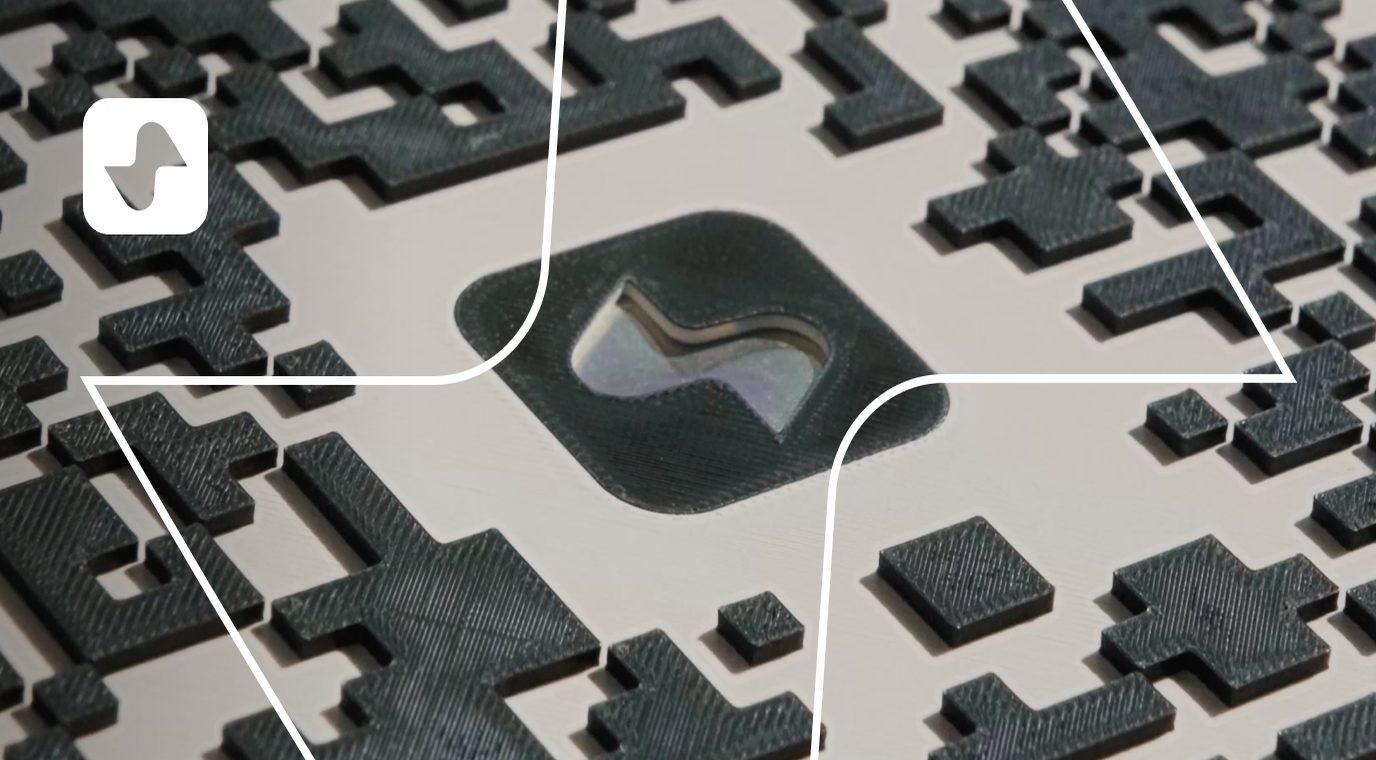
The no-device model goes further: the hardware disappears too. With Paymove the customer scans a QR plaque and pays with BLIK, Apple Pay or Google Pay from their phone, and the amount is entered in the app after the service — which fits a workshop and a salon, where the price is known only at the end. The fee appears only with the transaction.
The on-site calculator shows savings of up to PLN 11,520 a year at PLN 80,000 monthly turnover — 1.2% of turnover. The figure rests on one assumption: the margin the merchant currently pays the terminal operator stays with them, and the fee is added on the payer’s side. That is a category estimate, dependent on turnover, transaction count and the previous contract. Two things stay unchanged. The fiscal duty follows the type of activity, so the cash register and receipt remain on the firm’s side exactly as with a terminal and with cash. And the payer-side fee is visible on the customer’s phone screen — a change they see too.
What follows before you sign?
The bill for a two-year terminal contract is made of lines each too small to notice on its own, appearing in different months: commission after the turnover limit is used up, subscription after support ends, a minimum fee in a month with no sales, a penalty for missing the threshold, the cost of leaving early. The sum can be four digits, and nobody shows it in one place, because the offer has no such place.
All those lines can still be reduced to one ask at the table: write into the contract the subscription amount and commission rate that apply from month thirty-one, together with the date they start. The salesperson either has those numbers in the price list or has to call for them. How long that call takes says more about the offer than the whole deck.