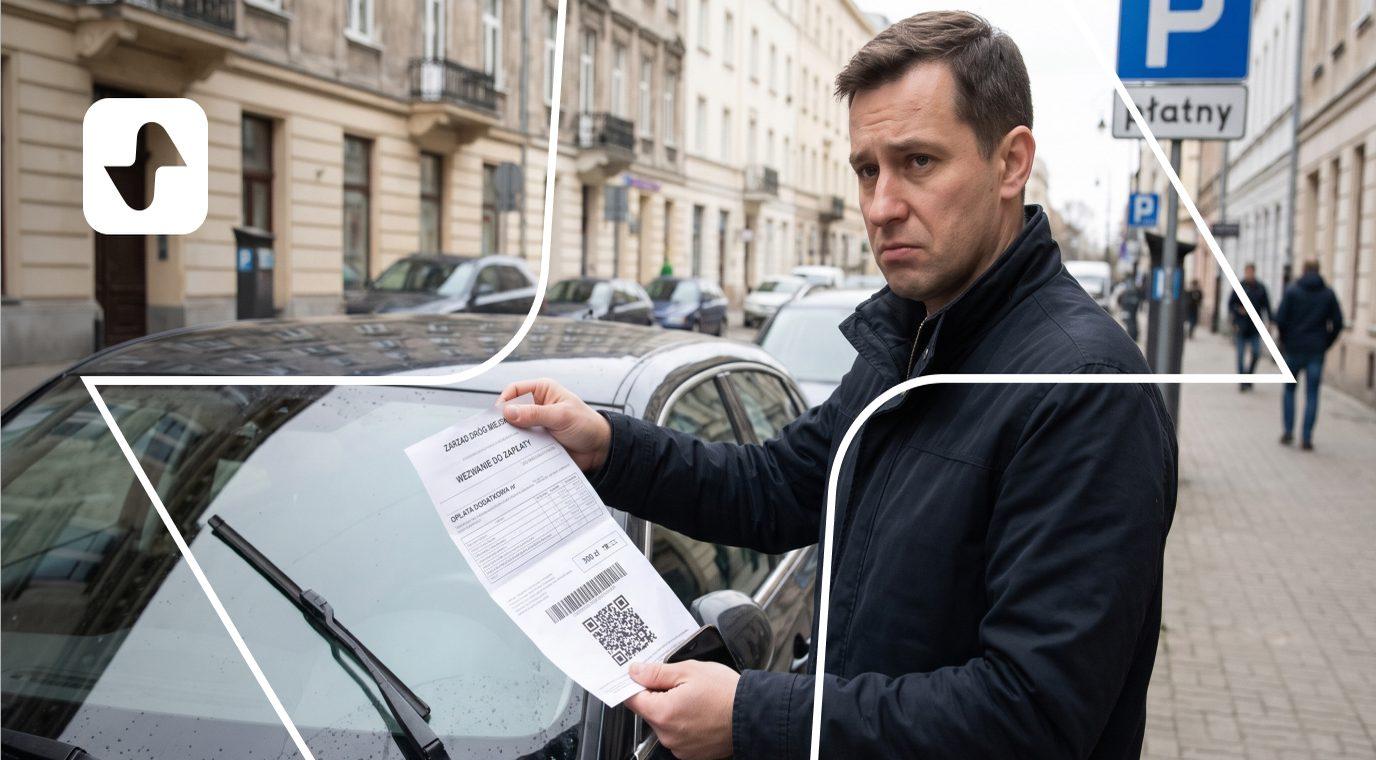
A payment machine where you can pay Warsaw’s additional parking fee stands at Chmielna 120 and runs Monday to Friday, 7:30 to 15:30. The device reads a barcode from the document left under the wiper, but it can be used “no earlier than the next working day after issue.”
A driver who returns to the car on Friday at eight therefore has a machine that opens Monday morning. For those two and a half days the document sits on the dashboard and does exactly what every paper without a calendar deadline does: it waits.
A parking payment demand in one year’s figures
The Warsaw Municipal Roads Authority annual report for 2025 gives figures almost nowhere else gathered in one place in this category. The Unattended Paid Parking Zone operated in 2025 for 249 days, covered 65,971 spaces, and controls numbered 14,157,511, or about 56,900 a day. Additional-fee documents issued numbered 460,877, which gives 1,851 a day and nearly seven per parking space over the year.
The first relativisation goes a way that usually escapes: a document ends 3.26% of controls. The remaining 96.7% close with no consequence for the driver, because the fee was paid or there was no basis to issue a document. A methodological note without which that figure invites over-reading: controls count control events, and one space may be checked many times in a day, so 3.26% does not describe how often an unpaid stay occurs in the zone. It is the load ratio of two processes: control is automated and mass, and the paper path handles a narrow stream of it.
The second figure sets proportions on the money side. ZDM reports total parking income above PLN 299.5 million, with two main items: stay fees PLN 221,550,473.21 and additional fees PLN 63,614,858.85. The first is money taken up front: without payment there is no paid stay, so collectability is a technical matter. The second, 3.48× smaller and about 21% of all parking income, is money that must be chased by letter.
How many issued demands come back as a payment?
The additional fee in Warsaw is PLN 300, and on payment within 14 days of issuing the document or receiving the demand PLN 200. Both rates have applied since 2 January 2023, so the 2025 cohort is settled entirely in that grid.
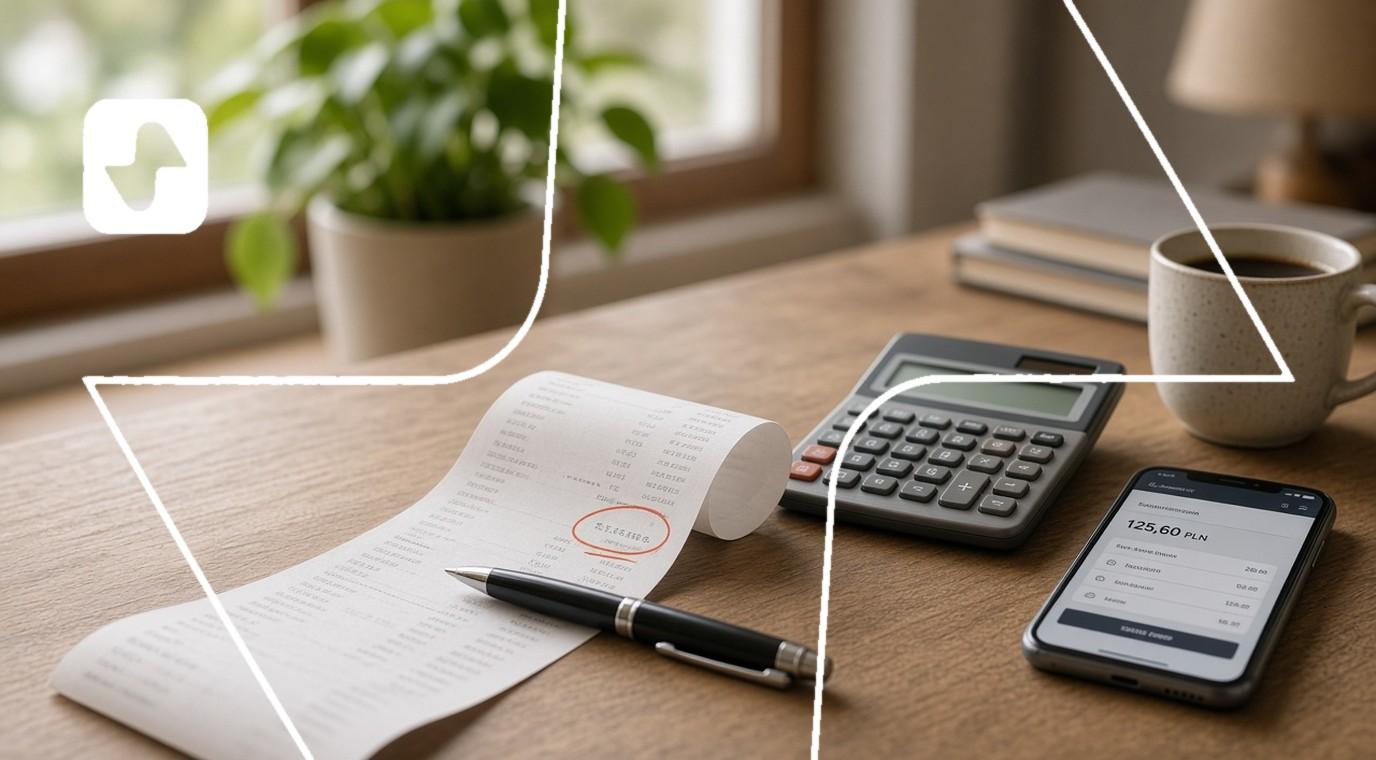
From that, ranges can be calculated. If all 460,877 documents were settled at the base rate, the amount due would be PLN 138.26 million; at the reduced rate PLN 92.18 million. Against PLN 63.61 million of actual inflows that is 46% in the first variant and 69% in the second. Real collectability of the cohort sits somewhere in that range and nobody publishes it.
Three things must be said about those ranges at once, or they look better than they are. Calendar-year inflows also include repayments of documents from earlier years, so collectability of the 2025 cohort alone is probably below the upper bound. Some documents are cancelled after a complaint and were never a receivable. And conversely: some 2025 demands were paid already in 2026, which this bill does not see. Numerator and denominator therefore come from different time windows and no recalculation fixes that.
There is, though, a second, independent measure. Presenting councillors with a zone-resolution change in Łódź, Roads and Transport Authority director Ewa Katarzyna Puczyńska gave a proportion from Kraków and Warsaw practice: three in five demands left under the wiper get paid, or 60%. The press account gives that figure without quotation marks, so its status is weaker than a quote. It lands in the upper half of the Warsaw range, which is the strongest available argument that the order of magnitude is well recognised.
A third reading carries exactly the same mixing of time windows as the ranges, so I give it with that caveat: per document issued in 2025 there falls PLN 138.03 of that year’s inflows, below the reduced rate of PLN 200. The cash difference between amounts due at PLN 300 and inflows is PLN 74.65 million; at the reduced rate, PLN 28.56 million. That is money the city has on its books, not in the bank account.
One hundred zloty of discount as a price on timeliness
The cut from PLN 300 to PLN 200 is a price the municipality set for itself. The city agrees to take PLN 100 less per document if the money arrives within two weeks. A reference for that amount sits in the same report: the average parking ticket in 2025 is PLN 8.63, and the average mobile payment PLN 8.07. The timeliness discount therefore equals 11.6 average tickets, and the additional fee at the base rate, PLN 300, 34.8 tickets.
At 460,877 documents and a PLN 100 difference the theoretical maximum of that discount is PLN 46.1 million a year (own calculation). That is an upper bound and nothing more: only on-time payments get the discount, and the PLN 138.03 average from the previous section shows a large part of documents do not use that threshold. What matters is the order of magnitude. A city ready, on one document type, to forgo an amount of that scale for faster settlement buys something measurable in return: a shorter cycle, fewer chases, fewer enforcement titles and fewer cases near the limitation edge.
The question that follows is purely operational: is the path to payment built so those two weeks can be used.
What stands between a paper under the glass and a transfer
Channels for paying Warsaw’s additional fee are three. A transfer to an individual account number whose last twelve digits match the document number. An “Additional fee – online information” panel that needs a registration number and a PIN from the demand. And the payment machine from the opening of this text, at one address and during office hours.
On the document there is a barcode. Only that one machine reads it.
In Poznań, where the additional fee is PLN 200 within 30 days and PLN 350 after the deadline, the notice already has a QR code. Paying with it works only at a parking meter and only in two zone areas, Wilda and Łazarz. In Gdańsk, at PLN 170 within 14 days and PLN 300 after the deadline, the notice has no QR code at all; transfer, online panel and a payment machine at the customer office remain.
In Warsaw, Poznań and Gdańsk the document therefore has a machine-readable label, and the reader of that label in none of those cities fits in the payer’s pocket. By comparison: paying for the stay itself takes that same person as long as typing a registration number on a phone, and mobile payments accounted in Warsaw in 2025, according to the same report, for about PLN 130 million versus PLN 101.9 million a year earlier. The digital channel in that zone is mature. It bypasses only this one paper.
What does the administrative path add to the demand?
When fourteen days pass, the procedure starts and is fully described by the rules. First a chase whose cost is PLN 16 and burdens the obligor (regulation of 5 January 2021, Journal of Laws 2021 item 67). Then an enforcement title to the tax office; on starting administrative enforcement a PLN 100 handling fee, and further an enforcement fee of 10% of amounts enforced toward the receivable, interest and chase costs (Art. 64 of the Act on administrative enforcement proceedings), so on PLN 300 due and PLN 16 chase costs PLN 31.60 counted without interest.
Add-ons therefore give PLN 147.60, and the whole matter at least PLN 447.60, because this bill omits interest. Against PLN 200 at the fourteen-day threshold that is 2.24× more paid by the same person for the same stay.
The obligation expires after 5 years, counted from the end of the calendar year in which the fee was to be paid, and the limitation clock stops in enforcement proceedings. Five years is in practice very long. In an audit of 17 cities the Supreme Audit Office found that additional-fee arrears grew systematically in 12 of them, and collection ran current in only five; in Gdańsk the period to issue a chase was then almost five years. The report is from 2019 and that is its main limit. A later 2024 audit of municipalities’ own revenues covered a different subject and sample, so the two do not form one line, but the second says something separately important about the same tool: NIK found irregularities in 1,395 chases, which it put at 60.3% of those examined, and in 675 enforcement titles.
The conclusion from that is more cautious than the figures alone would look. The paper path ultimately rests on administrative enforcement, so money is reached. It costs time, though: it is long and sensitive to delay at every node, and every month of lag moves the case closer to the threshold beyond which the creditor recovers nothing.
What does a code on a parking payment-demand document change?
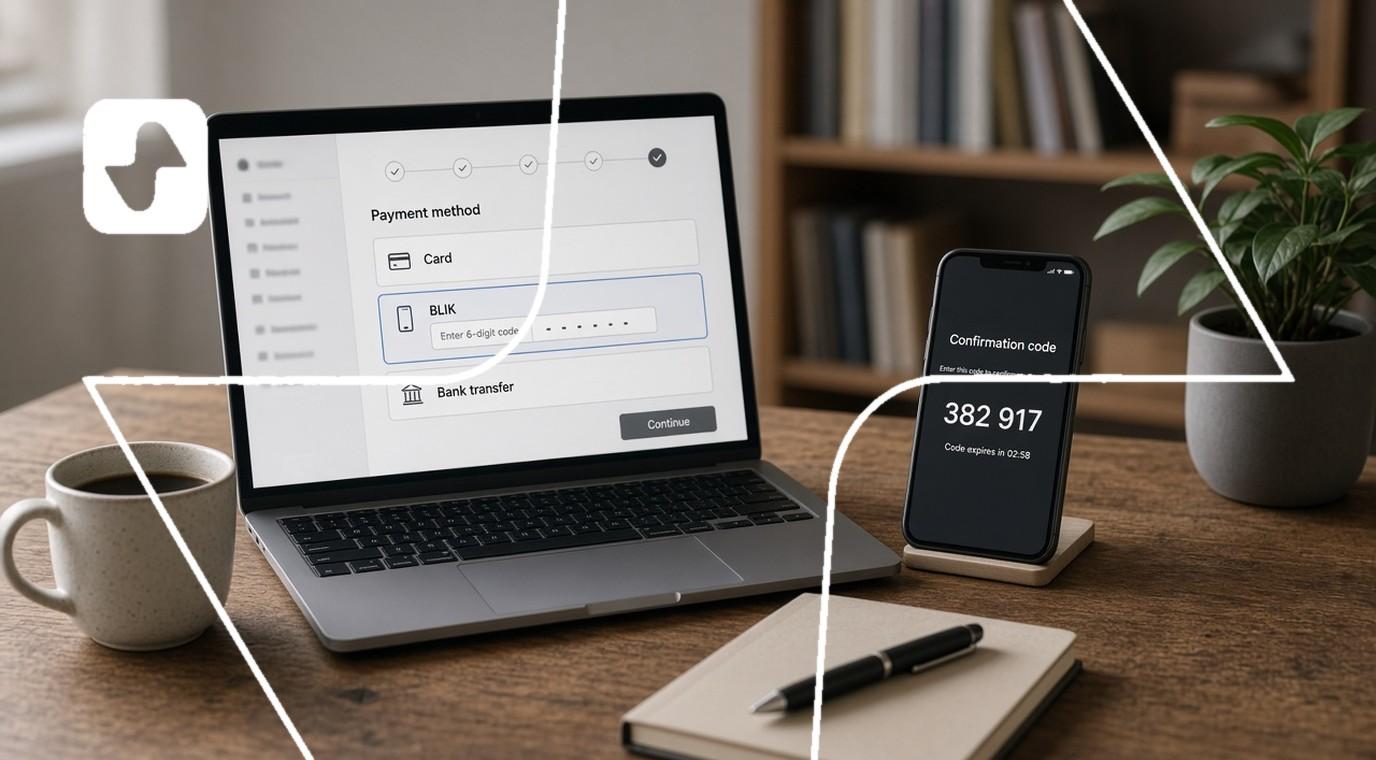
Technically it looks like this. Each document gets its own one-time tokenised code, and with it an identifier on the issuer’s side. The driver scans the code with the phone camera and pays with BLIK, Google Pay or Apple Pay, without downloading an app and without creating an account. Funds reach the issuer’s account the next working day, and balances and individual transactions are visible in the panel live.
For a roads authority the most important thing, though, is something that vanishes in product descriptions because it sounds dull: the payment returns with the document number it belongs to. Matching is then not accounting work but a system property. The “unidentified payment” line disappears, so does a transfer title mistyped, and so does a chase sent to someone who already paid. Paymove operates as a Small Payment Institution in the KNF register under number MIP 245/2024, which for a public-law receivable is the question asked first.
Industry estimates for QR-code payment on documents speak of obligations settled 7× faster and of 15% higher inflows in a third of the time. The size of the effect in a concrete zone must be measured on its own cohort.