Someone in the firm looks through the unpaid-invoice list in the morning and sees that one transfer still is not there. From that minute everything that follows has a price: checking whether payment arrived from another account, a phone call, a letter, a second conversation two weeks later. The counterparty received a full set of payment details on the day the invoice was issued and it did them no good.
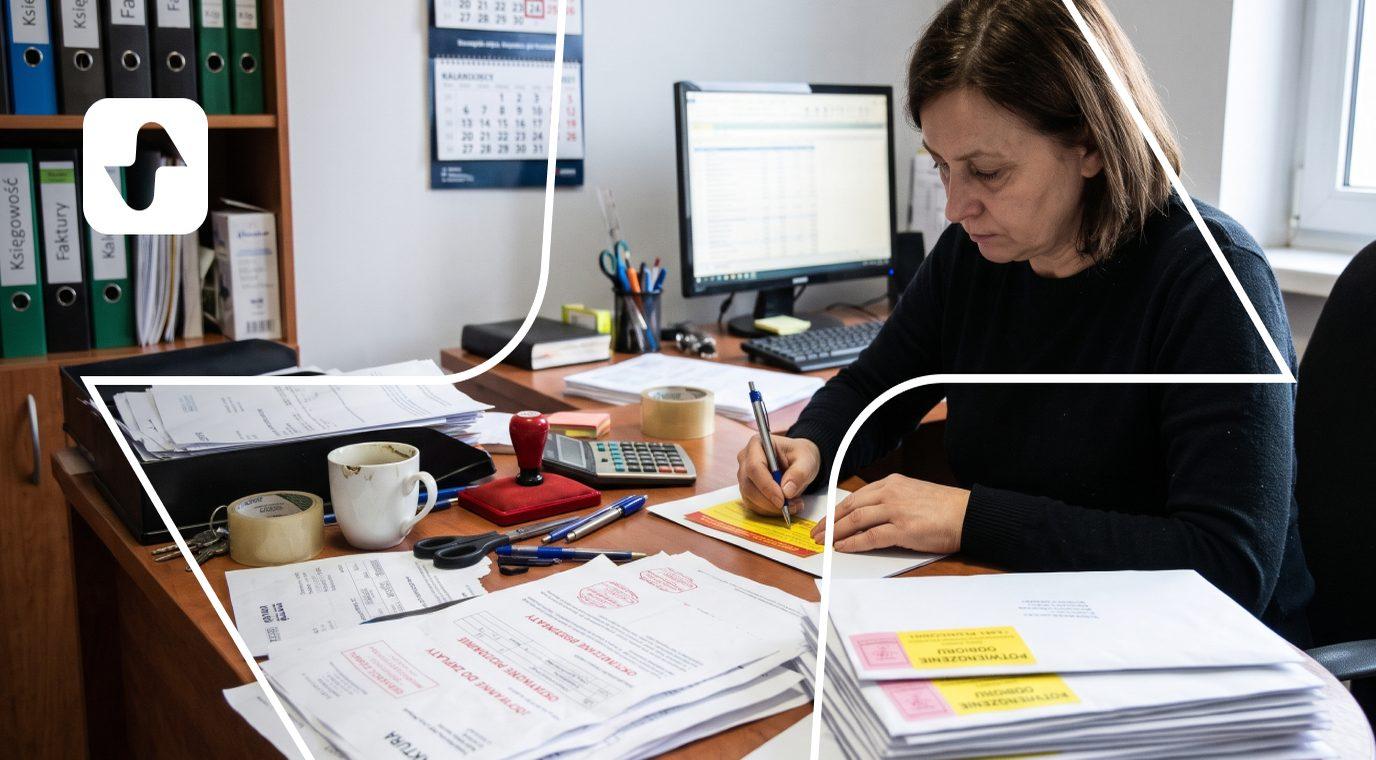
Of that whole list only one item has its own purchase proof: a priority registered letter with acknowledgement of receipt, PLN 13.80: PLN 9.80 for an S-format parcel up to 500 grams and PLN 4 for the slip that returns with a signature. The rest runs in the working time of someone who gets paid whether they call a debtor or book a transfer. That is why in most firms this cost ends as a feeling that “there is a lot of fuss with this,” though all its components are open.
Receivables-collection costs start before the first letter
From the September SME Scanner study by Keralla Research for BIG InfoMonitor on 500 firms selling on deferred terms comes the mix of tools used: 48% of creditors reach for a phone call, 44% for e-mail or SMS, 40% send a payment demand (most firms use several channels at once).
Firms also declare when they take the matter up: 15.5% react immediately after a reminder, 27% after a week, 22% at latest after two. Almost two thirds of the market reacts within fourteen days of the date on the invoice.
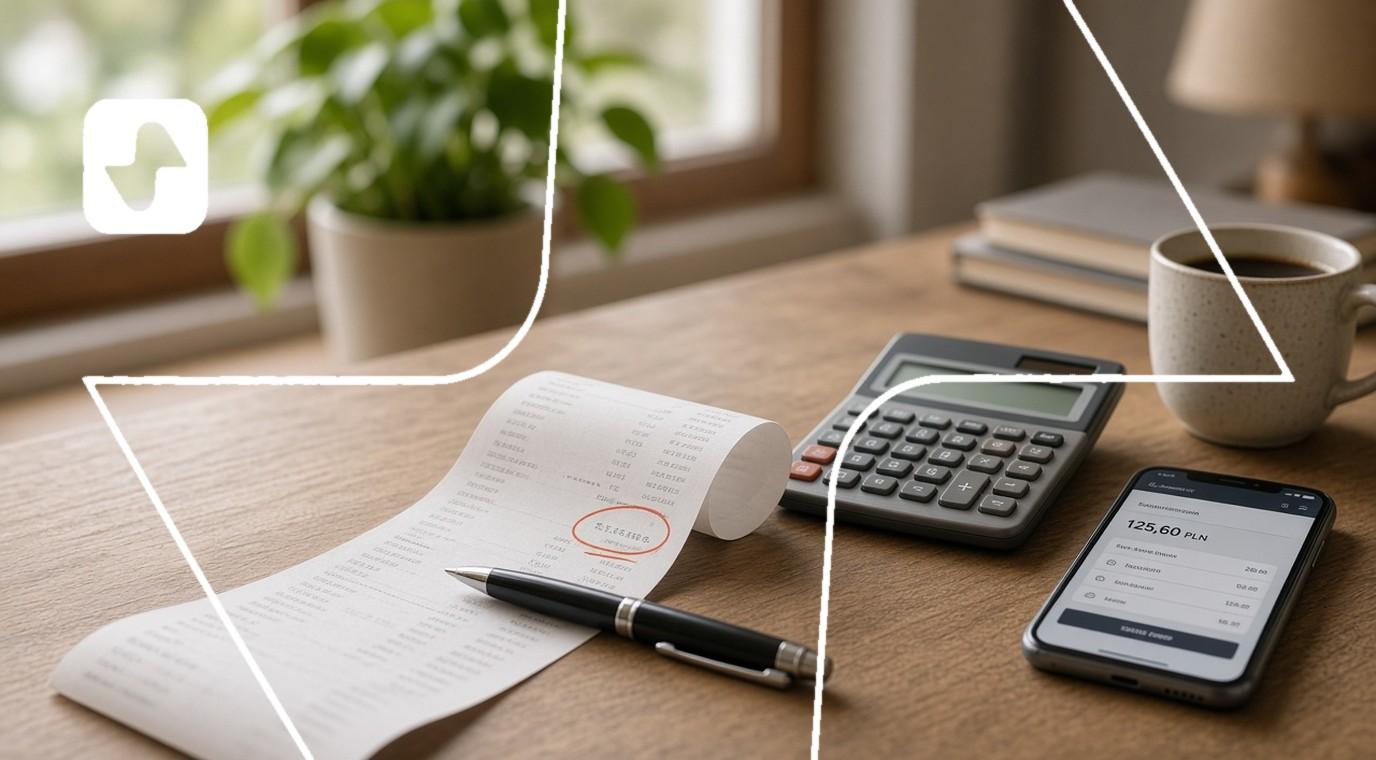
The minimum hourly rate in 2026 is PLN 31.40 gross. That is the statutory minimum for contracts and self-employment; a person running receivables in a small firm costs more, and the employer still pays contributions. A quarter-hour of work is PLN 7.85. A quarter-hour plus a priority registered letter with return slip gives PLN 21.65 per reminder. A fuller set of acts — phone, mail, a week later a letter, half an hour of someone’s time in total — costs PLN 29.50.
Twenty zloty and change sounds like small change. A hundred overdue invoices a quarter and two reminders each is PLN 4,330 a quarter and PLN 17,320 a year in reminding alone, before anyone has paid a zloty. That amount can be checked in every firm: number of demands sent times unit rate. One item can be cut along the way — electronic delivery confirmation costs 70 groszy instead of four zloty, or PLN 330 less on a hundred letters.
That amount starts to mean something in the unit in which firms already measure taking money. Two reminders on a PLN 5,000 invoice are PLN 43.30, or 0.87% of its value. On a PLN 1,200 invoice — 3.6%. The statutory interchange fee cap, the only hard-coded component of consumer-card acceptance cost in the Union, is 0.2% on debit cards and 0.3% on credit. Reminding therefore has its own percentage rate, rising as invoice value falls, and on a small receivable exceeds that cap twelvefold. The difference is one and decides everything: commission is paid on money that arrived.
An electricity bill grows when we use more power. The reminding bill grows when reminding does not work. A fifth chase costs exactly as much as the first, and hits a counterparty who has already decided.
The statute prices reminding. Once at 3.5 percent of the receivable, once at 0.29
The Act on counteracting excessive delays in commercial transactions gives the creditor compensation for receivables-recovery costs, without proof they were incurred, from the mere fact of delay. There are three thresholds: EUR 40 when the benefit does not exceed PLN 5,000, EUR 70 when it is higher than PLN 5,000 and lower than PLN 50,000, EUR 100 from PLN 50,000 up
The amount in zloty is set by the average NBP rate on the last working day of the month preceding the month in which the benefit became due — so it depends on the concrete invoice’s due date, not on the day you talk about it. At PLN 4.3728 per euro, from the NBP table of 29 September 2026, the thresholds are PLN 174.91, PLN 306.10 and PLN 437.28.
The first amount sticks to reality. For PLN 174.91 you can send eight reminders at PLN 21.65 — on a small receivable the creditor will not take to court anyway, that is a fair mapping of the cost of patience.
The upper threshold works the other way. On a PLN 5,000 benefit compensation equals 3.5% of the amount. On a PLN 150,000 invoice — 0.29%. The same statute prices the work of recovering money twelvefold differently, depending only on invoice size, though the number of phone calls may be identical.
One hundred fifty thousand is not a figure taken from thin air, but with it the unit must be watched. That is the average arrears sum per indebted entity: overdue corporate debts approached PLN 47 billion at end-June 2026, and the BIG InfoMonitor register listed 313,500 entities. That is a sum of many invoices against many creditors, not one benefit — compensation is claimed on each separately, and with a dozen at once courts can treat such a claim as abuse of rights.
The e-court fee is four chases. The order holds until the first objection
Electronic payment-order proceedings cost a quarter of the fee due in ordinary procedure. Up to PLN 20,000 dispute value the ordinary fee is stepped — in the PLN 4,000–7,500 band it is PLN 400, so in EPU PLN 100. Above PLN 20,000 it is 1.25% of claim value, so on PLN 150,000 it is PLN 1,875. The minimum is PLN 30.
On five thousand, PLN 100 equals under five reminders. The steps have a flaw reverse to intuition: on a PLN 1,000 claim a quarter of the fee falls below the minimum, so you pay PLN 30, or 3% of the amount. The smaller the case, the higher the fee share — exactly as with chases.
And yet in an IMAS International study for Kaczmarski Inkasso from July 2026 62% of entrepreneurs judged that a collection firm recovers money faster than a court — versus 47% in 2023. That it raises the chance of recovering the debt, 69% believe. That it can be done without spoiling the relationship with the counterparty — 48%, versus 37% three years earlier. That is an opinion study commissioned by a collection firm, so it measures market beliefs; it says nothing about path effectiveness. Beliefs, however, decide spending.
Two EPU limits explain that preference better than price. The claim must have become due no more than three years before the suit. And a debtor’s objection — free, just file within two weeks — since the 7 February 2020 amendment results in discontinuance. Earlier the case went of its own motion to the proper court; today the creditor has three months to bring a new action, keeping the effects of the original filing, and nobody refunds the EPU fee — it is credited toward the new one. A cheap fee buys a fast order only when the other side is silent.
Public oversight works at a scale the average firm does not reach
In Q1 2026 the President of UOKiK fined eight companies for excessive payment delays for a total of over PLN 2.6 million. Delayed benefits found in those cases exceeded PLN 200 million, or about PLN 25 million per case on average. Fines are some 1.3% of that value.
Oversight pace is rising. In all of 2025 there were 29 decisions for over PLN 10 million, and the office sent 177 soft notices; in Q1 2026 alone there were 69 notices — more per quarter than a year earlier. Entry thresholds stay where they were. Whoever waits for their PLN 8,000 is left with a phone, a letter and their own time.
In collection talk it is rarely said who stands on the other side of the delay. In the September study 40% of firms admitted they themselves delay payments to counterparties often or very often, and another 39% that they do so rarely. Reminding spend therefore circulates both ways on the market. With 75.2% declaring that payment order is decided by partner size and length of cooperation, it circulates asymmetrically — cost lands more often on the smaller side.
What changes when the invoice itself carries the path to payment?
The duty to issue structured invoices in KSeF entered on 1 February 2026 for taxpayers with sales above PLN 200 million and on 1 April for the rest except micro-entrepreneurs. The latter have until 1 January 2027, and through end-2026 may issue outside the system invoices totaling up to PLN 10,000 a month. For most creditors the “I did not get the invoice” argument no longer works; with the smallest counterparties it will still work for a quarter. The path from document to transfer stayed as before: retype the account number, retype the amount, retype the title.
The market noticed that gap faster than the legislator. In June 2026 the Polska Bezgotówkowa Foundation announced together with the Ministry of Finance and Mastercard and Visa a Cashless Payment Standard for e-Invoices: a KSeF Payment Identifier is attached to the invoice, and the recipient clicks and pays without retyping data.
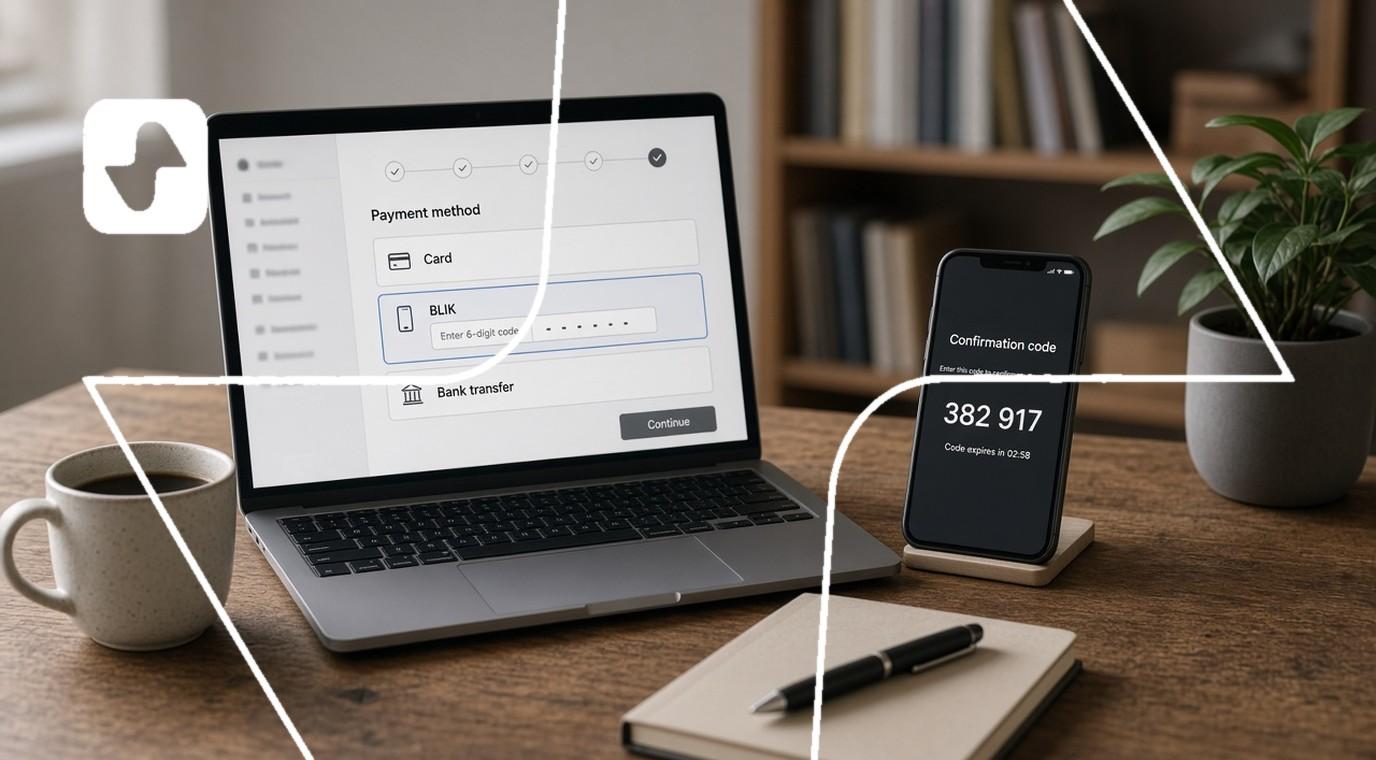
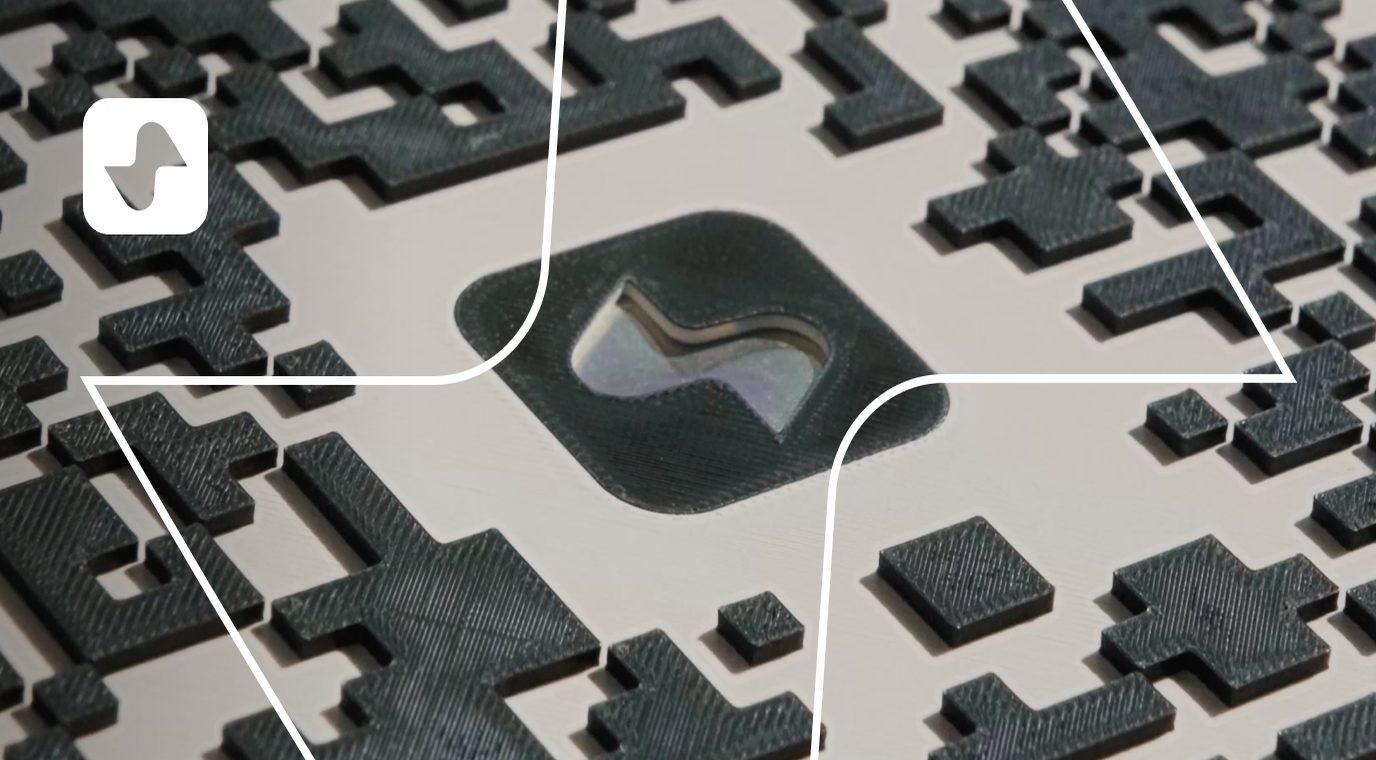
Paymove sells in this category DocPay — a QR code printed on a paper bill, invoice or demand that after scanning leads to payment by BLIK, Google Pay or Apple Pay. The code is one-time, encrypted with a token and expires after use. DocPay helps collect receivables an estimated 15% more often and 7× faster than standard channels.
Which cost grows with time?
The soft-collection bill is a special case in a firm: it is borne up front and in full, regardless of result. A hundred demands are a hundred times PLN 21.65, or PLN 2,165, no matter how many recipients reacted. Each further chase adds another twenty zloty and change to a matter in which the chance of a voluntary payment has already shrunk.
The cost of shortening the path to payment behaves the other way. It is borne once, at go-live, or in proportion to amounts that arrived. In both variants it grows with recovered sales; the number of failed attempts does not move that counter.
The statute foresaw that receivables-recovery cost would burden the debtor. Compensation covers it only halfway, though, because the creditor chases PLN 174.91 with the same phone calls as the invoice, and with a dozen invoices at once a claim for it can fall in court.
That is why the only item that can really be changed in this pairing lies before the due date. A chase hits a counterparty who has already decided, and costs the same every time. A shorter path to the transfer works earlier — in the days when payment is still decided by how easy it is to make. And the market leaves a lot of that time: since 15.5% of firms react at once, the remaining four fifths give the counterparty days or weeks. After that the price list is set by the post, the court and someone’s calendar.